How to Read an Audatex AutoSource Valuation Report
What each part of the report means, how the insurer’s value is figured, and what to check before you accept the offer.
By Kevin Murty, ASCAA certified vehicle appraiser · Updated November 2026
Quick Answer
An Audatex AutoSource report sets your totaled car’s value from similar cars for sale, adjusted for differences in mileage, equipment and condition. The parts that most often lower the value are missing options, condition ratings below normal, comparable cars that are far away or priced well below the rest, and a “typical negotiation” reduction on each comparable car. Check each one against your car, and ask the adjuster to explain or correct anything that’s wrong.
Every claim is different. This page is general information about how these reports work. It isn’t legal advice, and report layouts change over time. Estimate Consultants isn’t affiliated with Audatex or Solera.
What the Report Is
Audatex, a Solera company, makes AutoSource, a vehicle valuation tool insurers use for total loss claims. When your car is totaled, the insurer may send you an AutoSource report showing how it arrived at its value. Insurers also use CCC and Mitchell reports; see how to read a CCC report and how to read a Mitchell report.
State Farm, for example, used Audatex AutoSource reports to value totaled cars in Tennessee, as described in a 2026 federal appeals court opinion (Clippinger v. State Farm, 6th Cir. 2026).
The Parts of the Report
Layouts vary by insurer and year, but an AutoSource report usually covers:
Claim and vehicle information: the claim number, date of loss, VIN, mileage and where the car was kept.
VIN check and vehicle description: the year, make, model, trim, engine and the equipment the report says your car has.
Valuation detail: the adjustments made for differences between your car and the comparable cars, such as mileage, equipment and condition.
Condition: ratings for parts of your car, such as the seats, carpet, paint, glass, engine and tires.
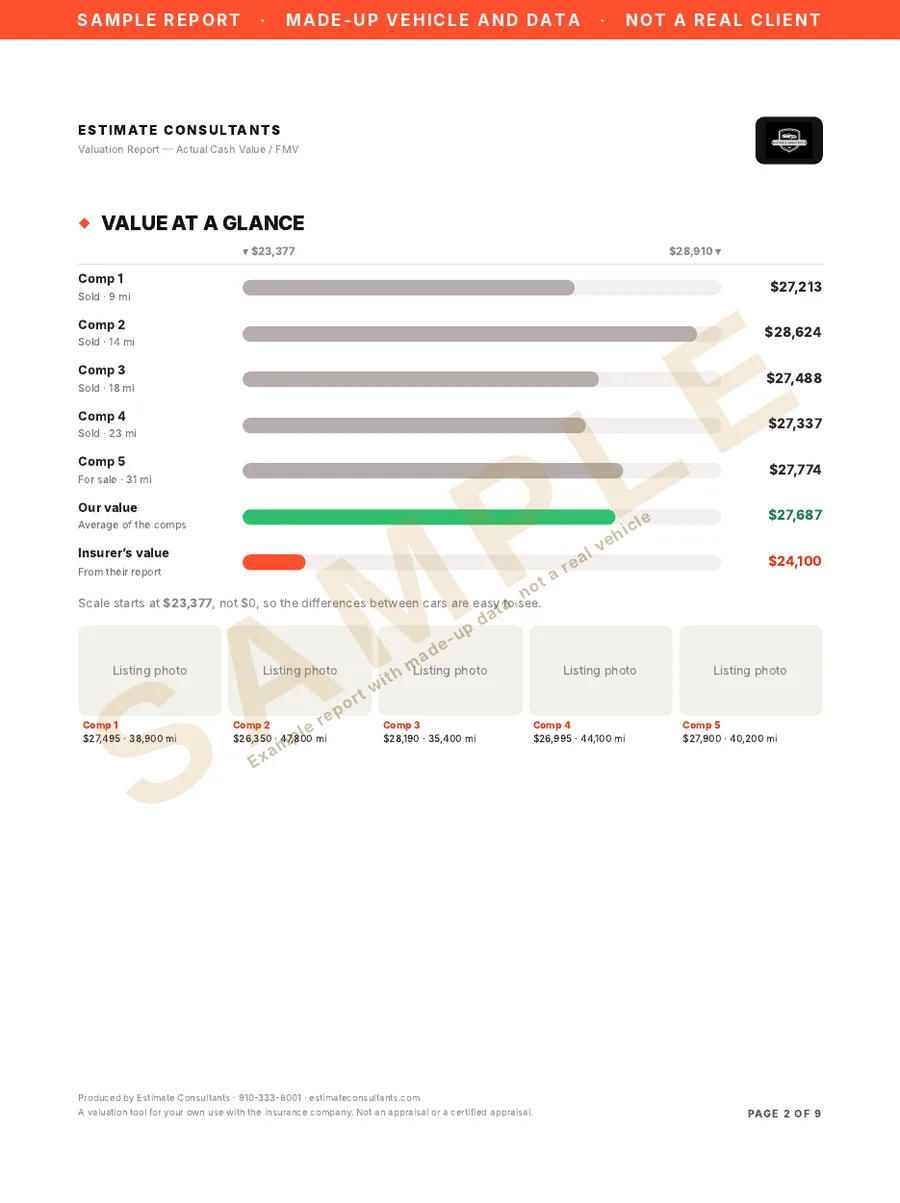
Comparable vehicles: the cars for sale the value is based on, with prices, mileage and distance.
Notes and the final value: comments from the person who inspected the car, and the value before and after tax, fees and your deductible.
How the Value Is Figured
The report compares your car with similar cars for sale. Each comparable car’s price is adjusted for differences in mileage and features, the adjusted prices are averaged, and adjustments for your car’s condition are applied (Clippinger v. State Farm).
Most comparable cars come from dealer listings. In a 2025 letter to Washington’s insurance commissioner, Solera described dealership listings as the “primary source” for comparable vehicles (Solera comment on Washington rule R2025-05).
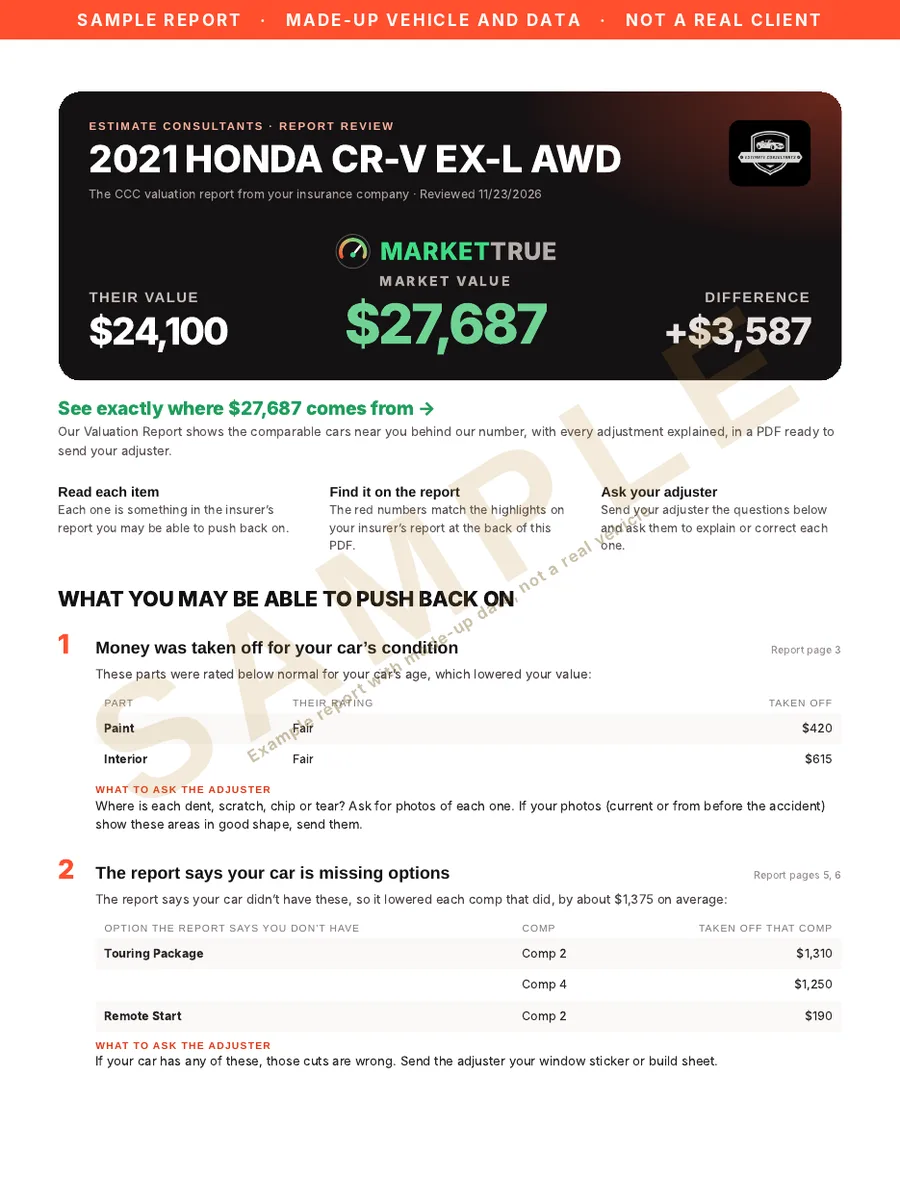
Because the value is an average, one wrong input moves the whole number: a missing option, a far-away comparable, or a condition rating below normal lowers every dollar after it.
The Typical Negotiation Adjustment
AutoSource reports may take a “typical negotiation” adjustment off the advertised price of each comparable car, on the idea that most people pay less than the listed price (Clippinger v. State Farm). CCC reports have a similar line called the projected sold adjustment.
This adjustment has been the subject of class action lawsuits. In April 2026, the U.S. Court of Appeals for the Sixth Circuit reversed class certification in a Tennessee case over State Farm’s use of the adjustment, holding that each car has to be valued on its own. The court did not decide whether the adjustment itself is proper.
What to ask: what the adjustment is based on, and whether the dealers selling the comparable cars were actually contacted about their prices.
What to Check
Your car’s description: the trim, engine, drivetrain and every factory package. A missing package lowers the value. Your window sticker or build sheet is the proof.
Mileage: it should match your odometer at the time of the loss.
Comparable cars: same year, make, model and trim, from your local market, listed close to your date of loss. Ask about any car that is far away, was listed long before your loss, or is priced well below the rest; a low price can mean accident history or a branded title.
If the insurer won’t move, a certified appraisal is the next step for your policy’s appraisal clause, court or arbitration. See our total loss appraisals.
Common Questions
What is an Audatex AutoSource report?
It’s the total loss valuation report some insurers use to set the value of a totaled car. Audatex is part of Solera. The report compares your car with similar cars for sale, adjusts for differences, and arrives at the insurer’s value.
What is the typical negotiation adjustment?
A reduction taken off the advertised price of each comparable car, on the idea that most buyers pay less than the listed price. It lowers your car’s value, so ask what it is based on.
Can I ask the insurer to change an AutoSource value?
Yes. Point out specific errors, such as missing options, wrong mileage, far-away comparables or condition ratings without proof, and ask for the value to be recalculated.
What if the insurer won’t change the value?
Most auto policies have an appraisal clause: you and the insurer each hire an appraiser to settle the value. That needs a certified appraisal. This isn’t legal advice; rules differ by state.