The two ways to get paid, and how to make sure the number is right.
By Kevin Murty, ASCAA certified vehicle appraiser · Updated November 2026
Quick Answer
You can claim your car’s value from the at-fault driver’s insurance, or file with your own collision coverage and let your insurer collect from them. Either way, the payout is based on your car’s actual cash value right before the crash, plus sales tax and fees where your state or policy requires them. Check the valuation report before you accept: it’s where low offers come from.
Every claim is different. This page is general, educational information, not legal advice. We’re vehicle appraisers, not a law firm, and we can’t represent you. Policies, laws and deadlines vary and change, so check your policy and talk with a licensed attorney in your state before relying on anything here.
Two Ways to Get Paid
The at-fault driver’s insurance. You don’t pay a deductible, but it can take longer, and they may dispute fault. If their offer is low, you negotiate, and if it still won’t move, your options include small claims or a lawsuit within your state’s deadline. Deadlines by state.
Your own collision coverage. Often faster. You may pay your deductible up front, and your insurer then tries to recover it, and what it paid you, from the other driver’s insurer. If the offer is low, most policies let you use the appraisal clause.
In North Carolina, the appraisal option can also be used with the at-fault driver’s insurer. North Carolina total loss rules.
If You Only Have Liability Insurance
Liability coverage pays for damage you cause to others, not for your own car. Your claim goes to the at-fault driver’s insurance. If that driver had no insurance, or not enough, uninsured motorist property damage coverage may pay for your car in some states. Uninsured motorist property damage by state.
Your deductible, if you went through your own insurer
Check the Offer Before You Accept
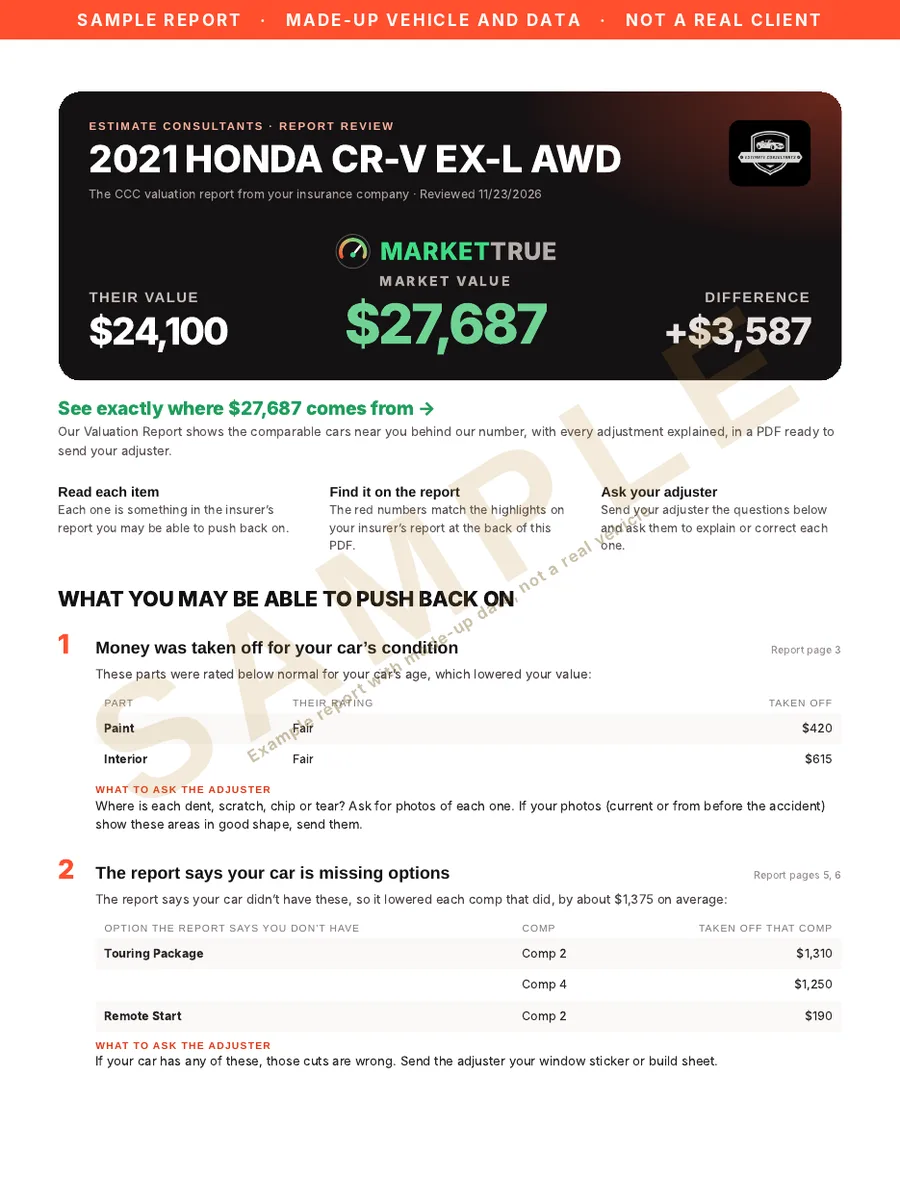
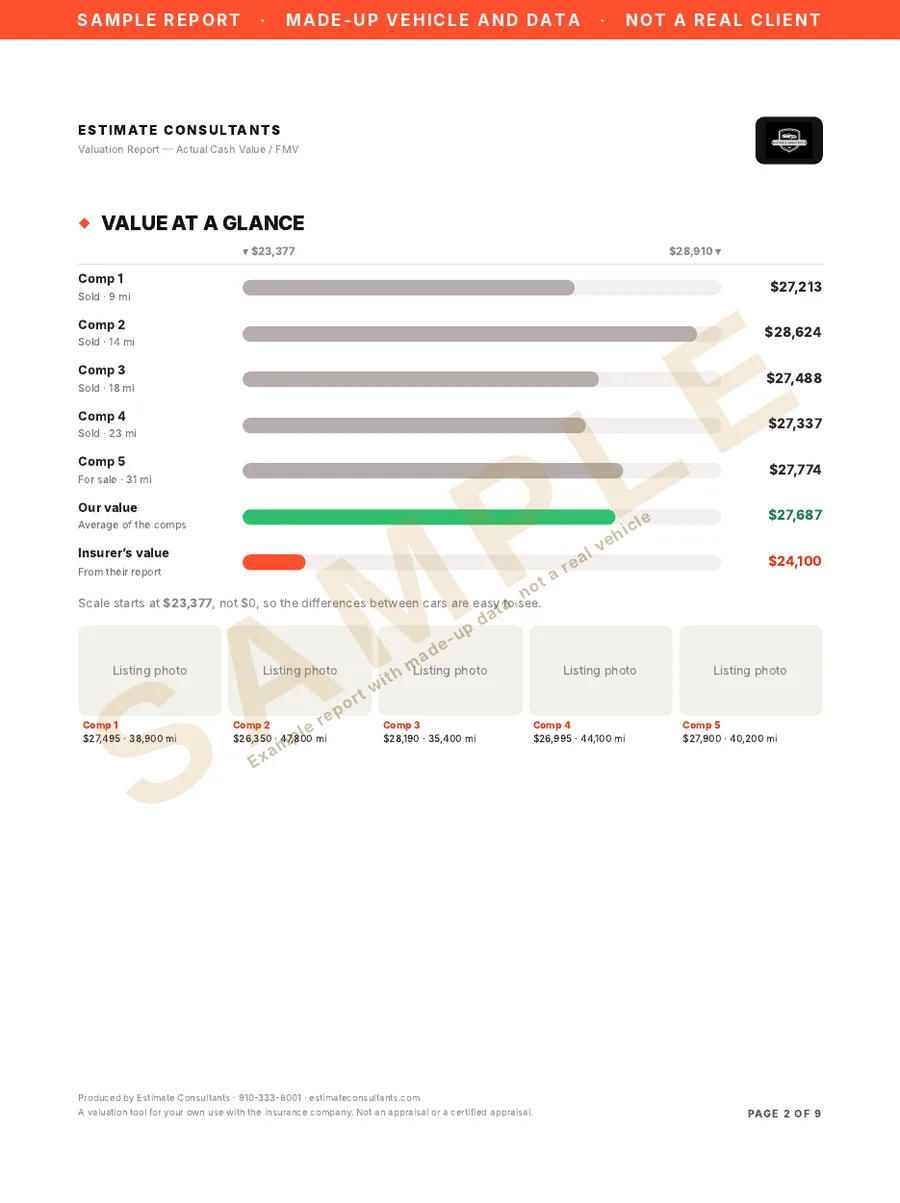
Whichever insurer pays, the number usually comes from a valuation report built from comparable cars. A wrong trim, missing options, far-away comps or a condition markdown can lower it by thousands.
Our Report Review checks their report in seconds, and our Valuation Report shows your car’s actual cash value from matching cars near you.
Common Questions
Do I pay my deductible if the accident wasn’t my fault?
If you file with your own insurer, you may pay it first, and your insurer tries to get it back from the at-fault driver’s insurer. If you claim with the at-fault driver’s insurer, there’s no deductible.
Can I get diminished value if my car was totaled?
Usually not. Diminished value is the resale value a repaired car loses. A totaled car is paid at its value right before the crash instead.
Can I use the appraisal clause with the other driver’s insurance?
Usually not, because the appraisal clause is part of your own policy. North Carolina is an exception: its appraisal option can also be used with the at-fault driver’s insurer.
My car is totaled and I only have liability insurance. What now?
Claim with the at-fault driver’s insurance. If they had no insurance, check whether your policy or your state includes uninsured motorist property damage coverage.